
Guide
Eurotunnel or Ferry: Crossing the Channel
Car train in 35 minutes or ship in 90: the comparison from the ferry routes' point of view.
- Calais - Folkestone by car train, up to four departures an hour
- One ticket per vehicle for up to nine people, dogs stay in the car
- For foot passengers, an open deck and northern England, the ferry remains the choice
- 35 minutes by tunnel, 90 minutes by ferry
- Price per vehicle
- Unaffected by weather
Guide
Tunnel and Ferry Compared
Table of Contents
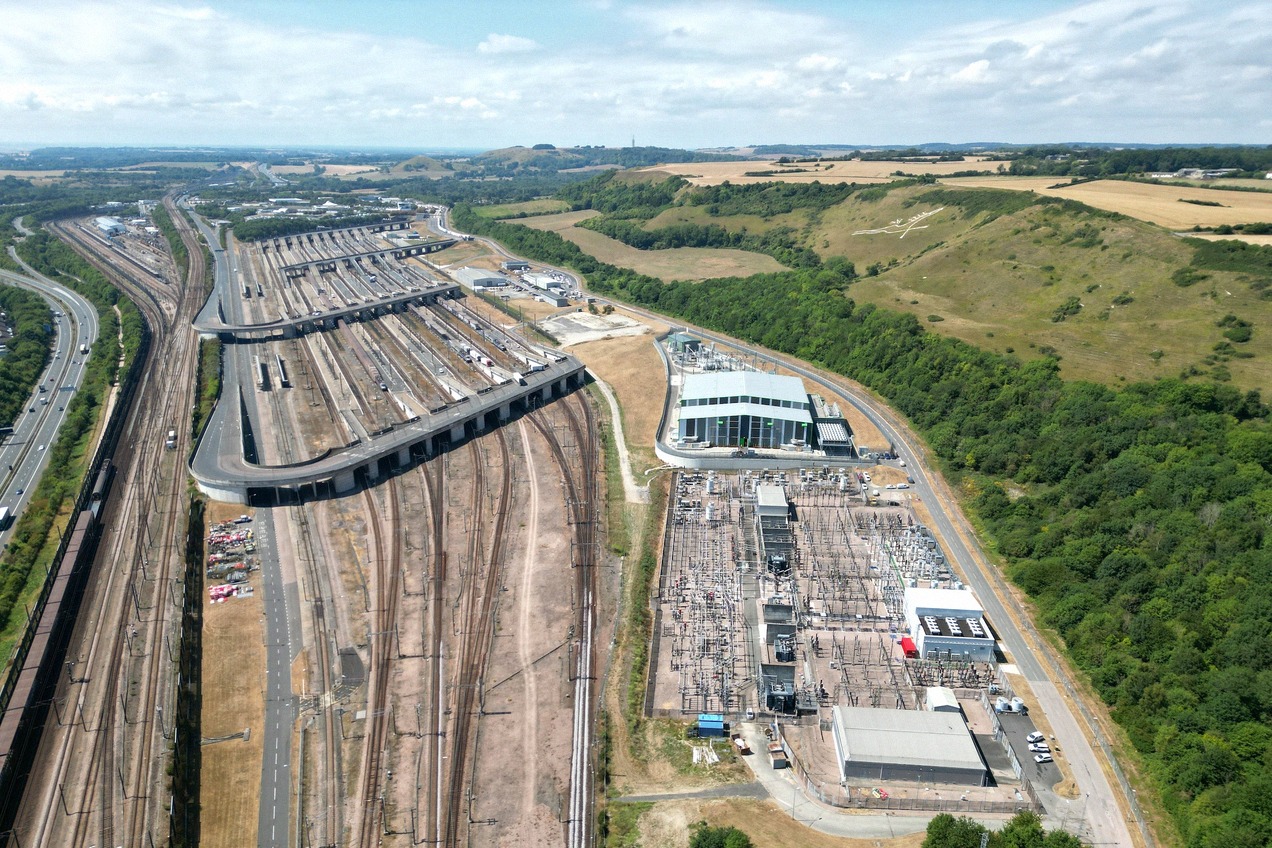
Alongside the ferry routes across the Channel and the North Sea, a fourth way to cross runs under the sea itself: the Eurotunnel between Calais and Folkestone. The LeShuttle car train takes your vehicle aboard, you stay in your seat, and 35 minutes later you drive off, in Kent if you're heading to England or back on the French coast if you're heading the other way. For this site, the tunnel is the benchmark the short ferry routes get measured against. The tunnel itself, from fares to the terminal procedure, is covered in detail on channeltunnel.net.
What Makes the Tunnel Different
The car train runs up to four times an hour, around the clock, every day of the year, in both directions. The crossing itself takes just 35 minutes, against roughly 90 minutes on the shortest ferry route, Calais - Dover, and about two hours on Dunkirk - Dover. Add to that the time at the terminal on both sides: for the tunnel you should arrive at least an hour before departure, border checks for both countries happen before boarding, and once you arrive you drive straight onto the motorway with no further checks.
The second difference is how fares work. One tunnel ticket covers the vehicle, up to nine people can travel on it, and luggage costs nothing extra. Ferry operators price by vehicle and occupants depending on the line, so a full car works out differently from a lone driver. The third difference is the weather: the tunnel has no swell and no storm cancellations, which can tip the balance in winter and during autumn gales.
When the Ferry Still Wins
The ferry has the edge as soon as the destination isn't the south east of England. If you're headed for Yorkshire, the north of England or Scotland, the overnight ferries Rotterdam - Hull and Amsterdam - Newcastle let you skip the long drive down through France and sleep through the crossing instead. If London is the goal and you'd rather avoid the Channel altogether, Hoek van Holland - Harwich gives you a day or night link straight to England's east coast.
Foot passengers have no option in the tunnel: the car train carries vehicles only, so travellers without a car take the Eurostar or selected P&O sailings on Calais - Dover. And if you want the crossing itself to be part of the trip, with a restaurant, shop and a view of the White Cliffs of Dover, only the ship gives you that.
Fares and Ticket Types
As of September 2026, the operator's fare ladder starts with day trips returning within two days, runs through short-stay tickets valid up to five days and standard tickets with no length-of-stay limit, and tops out at the fully flexible Flexiplus fare. Between the cheapest and most flexible ticket, the price for a car one way differs by almost a factor of five; motorhomes, vehicles with trailers and anything over 1.85 m tall are charged by space needed on the low-loader wagons, and motorcycles pay half the car rate. Travel date, time and any extras determine the final amount, with the binding price set at booking. Ferry route prices are listed in the price overview.
What's the Same Either Way
Travellers from the EU, EEA and Switzerland need a passport and the electronic travel authorisation ETA to enter, whether by tunnel or ferry; the rules are set out on the page Entering England. Dogs and cats travel with a microchip, rabies vaccination, EU pet passport and, for dogs, tapeworm treatment 24 to 120 hours before arrival, though in the tunnel they stay in your own car rather than on a closed vehicle deck. The car train doesn't carry vehicles running on LPG; the ferries have their own rules for gas cylinders on board instead. Both are booked the same way: the Calais - Folkestone crossing sits alongside the ferry routes in the booking system, and the timetable shows sailing times for the ships.
FAQ
Questions About Tunnel and Ferry
Is the Eurotunnel cheaper than the ferry? +
It depends on your vehicle, the number of passengers and the day you travel. The tunnel charges per vehicle for up to nine people, while ferry operators price by vehicle and occupants depending on the line. Booking early and travelling at off-peak times is cheaper either way. You'll find ferry prices by route in the price overview.
Can I take a motorhome through the Eurotunnel? +
Yes. Vehicles over 1.85 m tall travel on the car train's low-loader wagons, up to 18 m in overall length, with rules for gas tanks. The Dover ferries carry motorhomes too; the operators' size limits are set out in the guide Travelling to England by Motorhome.
Is the tunnel or the ferry better with a dog? +
In the tunnel, your dog stays with you in the car for the 35 minutes. On the ferry, it stays in the vehicle on the closed car deck, or in a pet-friendly cabin on the overnight crossings. The entry rules are the same either way; they're set out in the guide Travelling to England with a Dog.
Book the Tunnel or a Ferry
Check departures and prices for Calais - Folkestone and the ferry routes to Dover, then book the crossing that suits you.