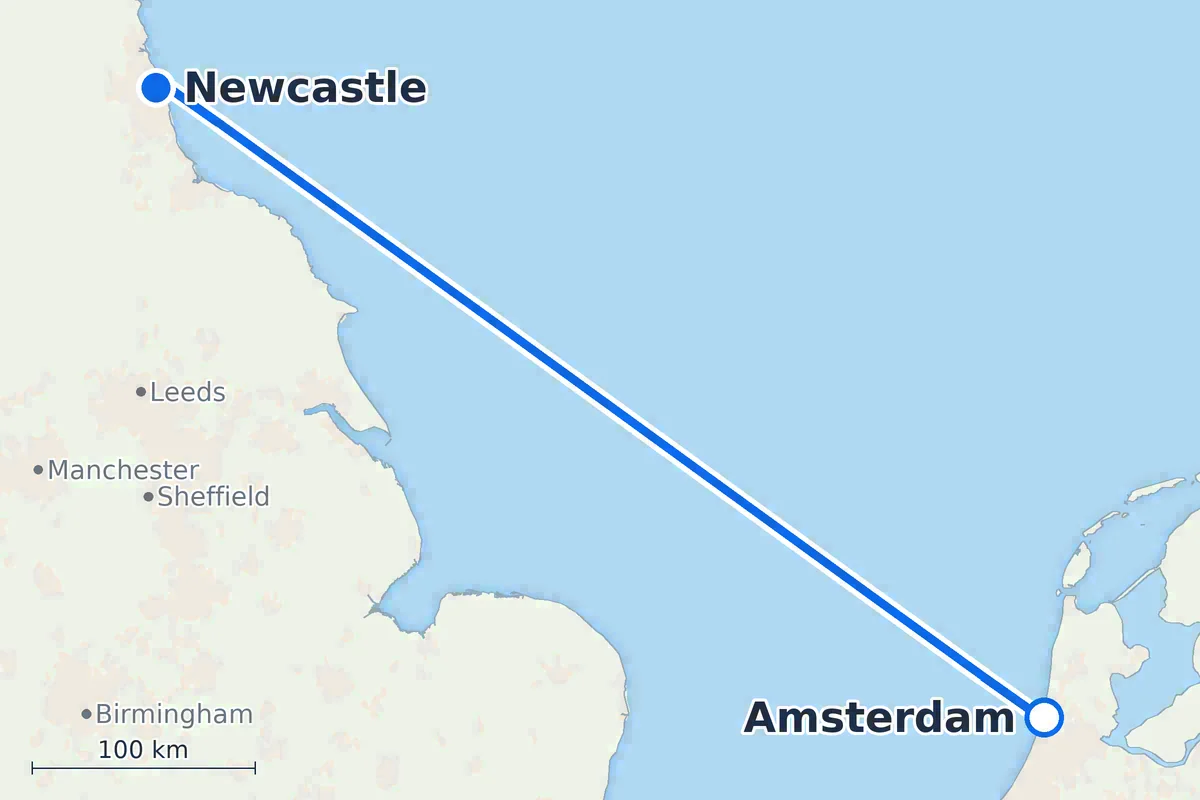
Amsterdam - Newcastle
Overnight by ferry directly from Amsterdam to Newcastle

From
€26
Timetable
Compare all ferry connections to England and find the best route for your trip
Our most popular ferry routes to England.
Prices per person, one way
© OpenStreetMap contributors
England route map
Interactive map of all ferry connections and operators to England. Click a route for details.
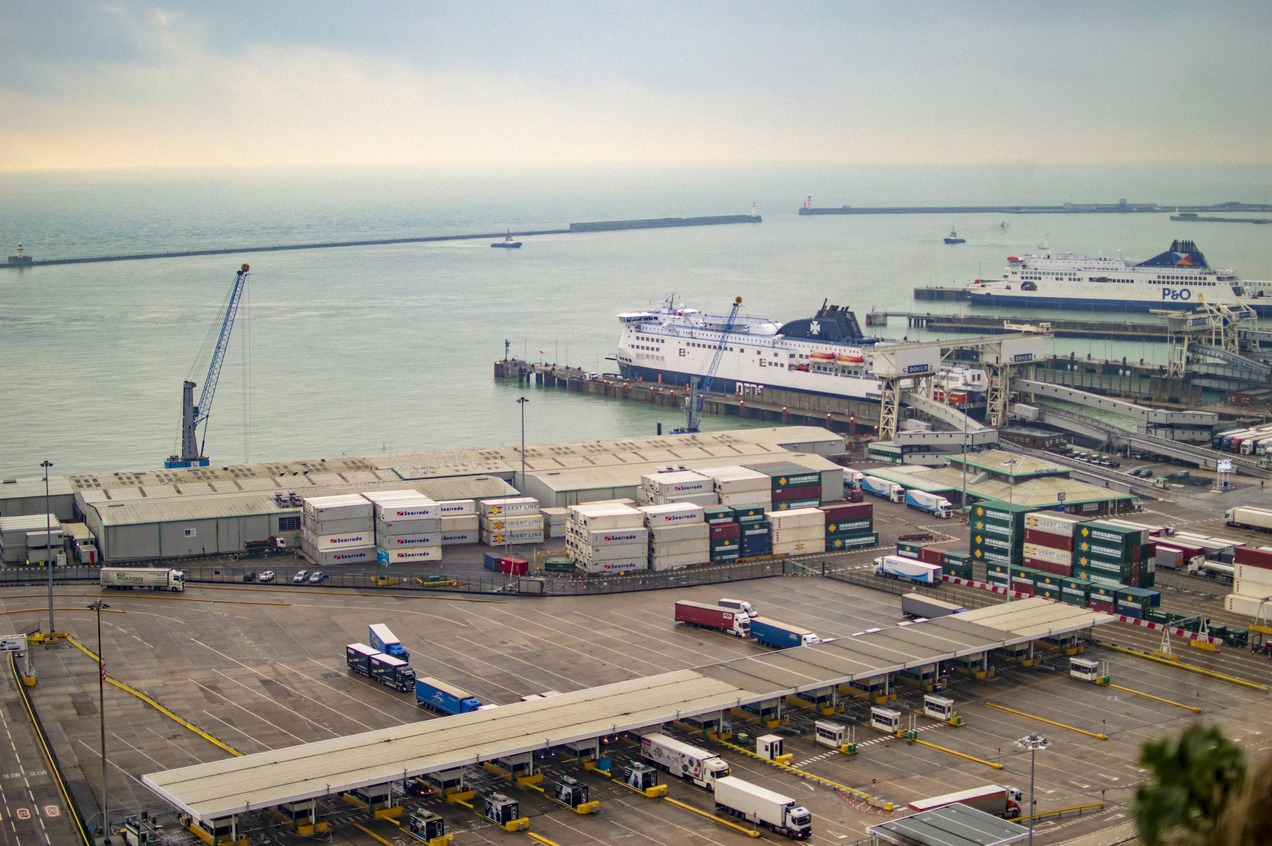
The shortest crossings to Great Britain run across the English Channel to the ferry port of Dover in south-east England.
Dunkirk - Dover (DFDS) takes about 2 hours and runs up to 12 times a day. This route is for vehicles only; foot passengers cannot travel on it.
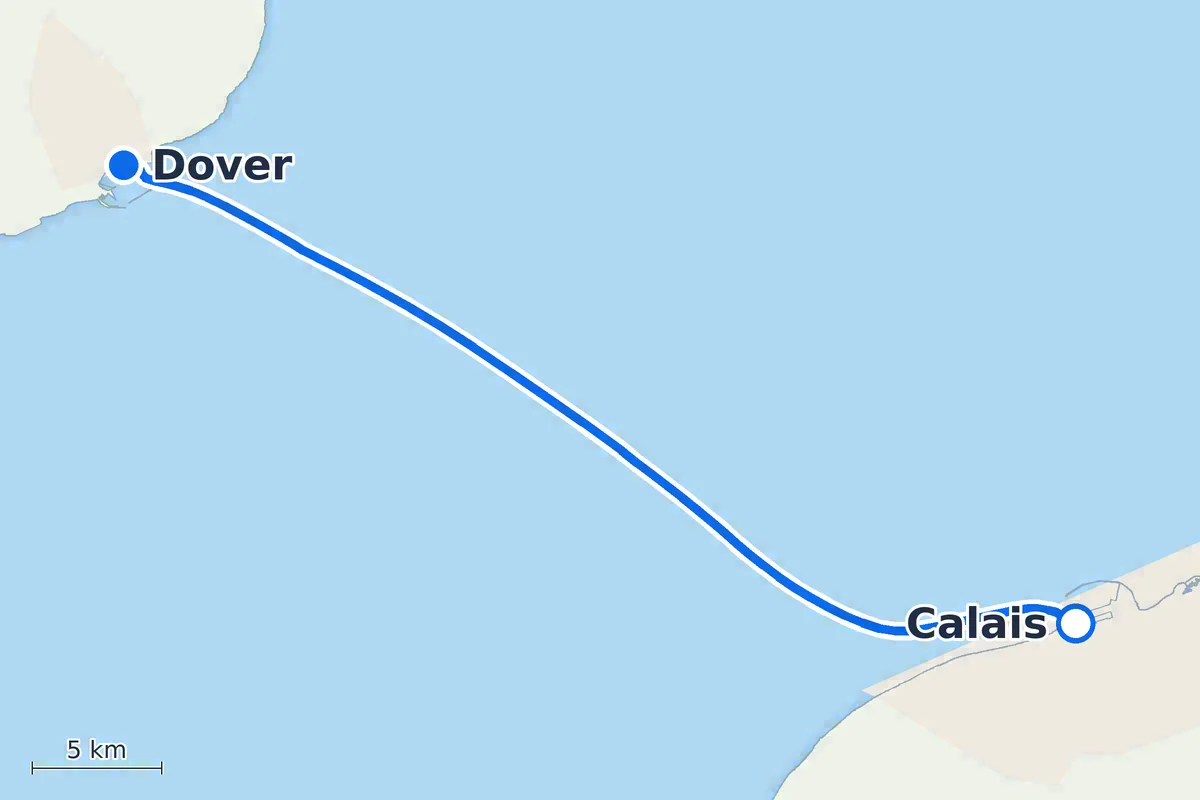
Calais - Dover (P&O Ferries, DFDS and others) is the main Channel route, with a crossing time of around 90 minutes. Ferries run at a very high frequency, roughly every 30-60 minutes during the day, with regular sailings at night too.
The fastest option is the Eurotunnel Le Shuttle for cars on the Calais - Folkestone route: the train journey through the tunnel takes only about 35 minutes. Dover is just around 110 km from London, making it an ideal arrival port for trips to south-east England.
Three ferry lines run from the Netherlands to England, a handy way to skip the Channel crossing altogether.
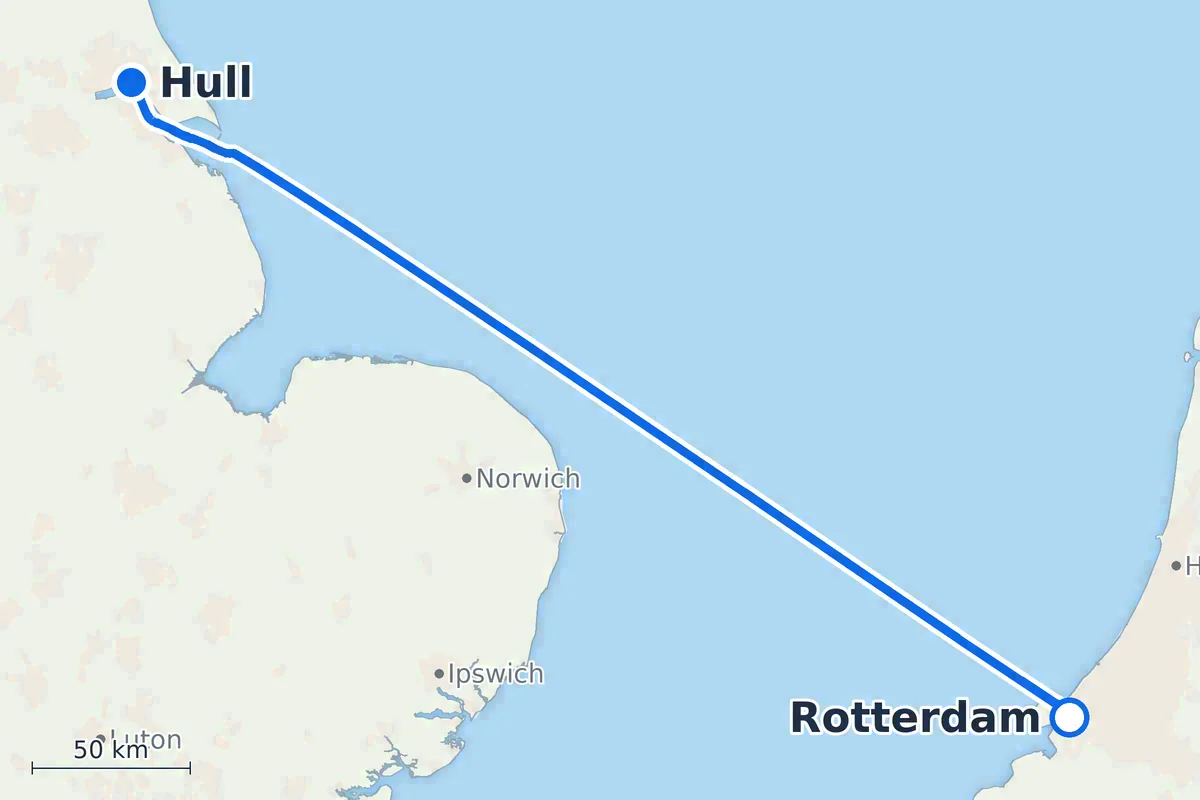
Rotterdam - Hull (P&O Ferries) is a comfortable overnight ferry with a crossing time of around 11-12 hours (departing in the evening, arriving in the morning). Hull is in northern England (Yorkshire) and gives you direct access to the north without driving through the south of the country. Terminal location, parking and the shuttle to the station are covered on the Hull ferry port page.
Amsterdam (IJmuiden) - Newcastle (DFDS) also sails overnight, with a crossing time of around 16-17 hours. Newcastle, in north-east England, is the ideal starting point for trips to northern England or Scotland, and Edinburgh is around 2.5 hours away by car from the port.
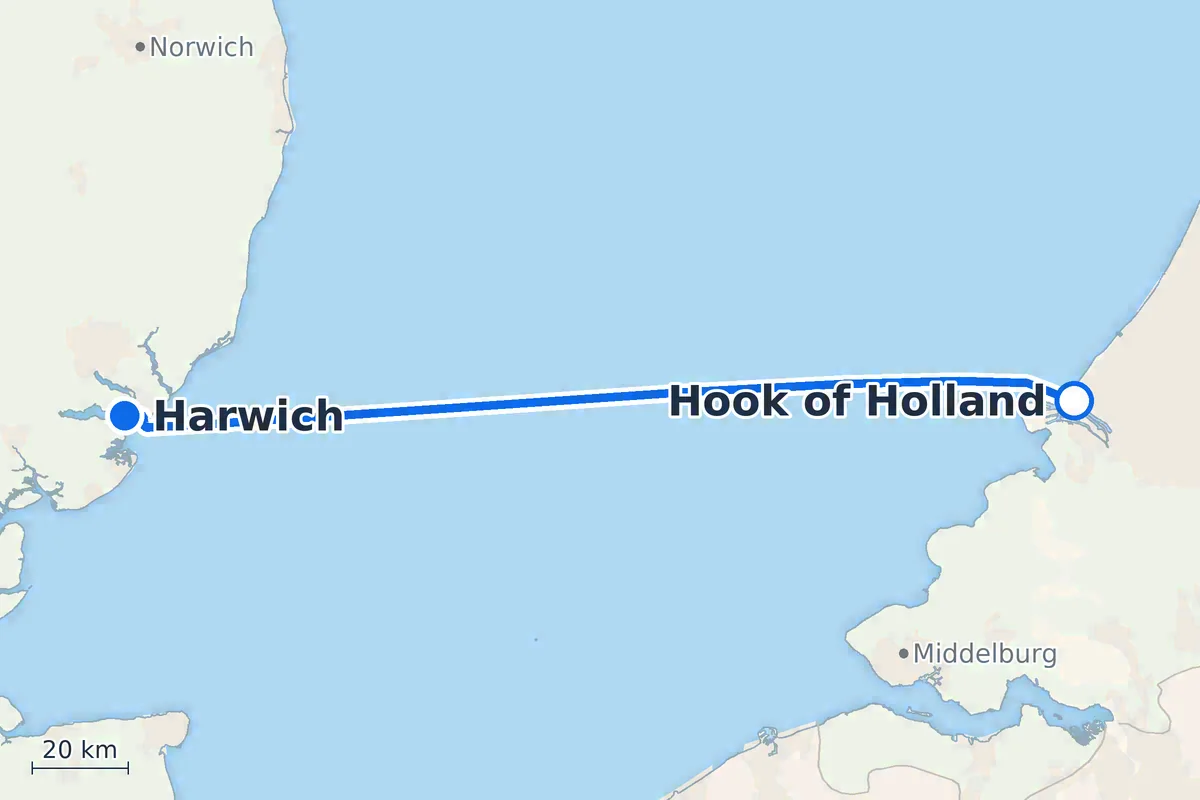
The Hoek van Holland - Harwich route (Stena Line) takes around 6-7 hours and runs daily, with both day and night sailings. Harwich lies on England's east coast (Essex), with good transport links to London. Getting to the Stena terminal by car or metro is covered on the Hoek van Holland ferry port page.
Several ferry connections run from Normandy in northern France to southern England, a practical option if you're travelling via Paris or France's Atlantic coast.
Dieppe - Newhaven (DFDS/Transmanche) takes about 4 hours. Up to three ferries a day connect the Normandy port town of Dieppe (near Rouen) with Newhaven in Sussex (near Brighton). Some sailings run overnight with cabins or reclining seats.
Le Havre - Portsmouth (Brittany Ferries) currently runs only a few days a week as an overnight crossing (around 10-11 hours). Le Havre has good transport links to greater Paris, while Portsmouth in Hampshire is a key gateway to England's south coast.
The busy Caen (Ouistreham) - Portsmouth route (Brittany Ferries) takes around 6 hours by day or 7 hours overnight, with up to three sailings a day. Both day and night crossings are available, and cabins can be booked.
From the port of Cherbourg on the Normandy peninsula, two routes run directly to England:
These routes from Cherbourg save you a long drive across France and are especially handy if you're heading straight for south-west England (Dorset, Devon, Cornwall).
Two ferry routes run from Brittany in western France to England (Brittany Ferries), perfect if you want to combine Brittany's scenic coastline with a trip to south-west England.
St Malo - Portsmouth runs year-round, up to daily. The crossing takes around 9 hours by day or 10-11 hours overnight. Night sailings are common, and cabins are available.
Roscoff - Plymouth also runs year-round, usually once a day. Depending on the time of day, the crossing takes around 5-6 hours (daytime) or about 8 hours (overnight). This route links Brittany directly with Devon/Cornwall, saving you the long drive across England.
Tip: Book your ferry crossing well in advance, especially in high season and on popular routes, to secure the best prices and availability.
FAQ
The most important questions about ferries to England, answered in brief.
The fastest way is across the English Channel: Calais - Dover in around 90 minutes and Dunkirk - Dover in about 2 hours. From the Netherlands, overnight ferries run on the Rotterdam - Hull and Amsterdam - Newcastle routes, as well as Hoek van Holland - Harwich.
From around 90 minutes on the Channel route Calais - Dover to 16 to 17 hours overnight on Amsterdam - Newcastle. The Rotterdam - Hull overnight ferry takes about 11 to 12 hours.
Yes, since 25 February 2026 all EU citizens need a valid ETA entry permit and a passport, a national ID card is no longer accepted. Check our England entry requirements guide for full details on how to apply.
Yes, all routes are served by car ferries. For motorhomes, height and length limits vary by operator, see our guide on travelling to England by motorhome for the full details.
Yes. DFDS and P&O Ferries offer pet-friendly cabins on their overnight ferries. An EU pet passport is still accepted for entry, along with a microchip, rabies vaccination and tapeworm treatment. Full details are in our guide on travelling to England with your dog.
Compare the connections and check departure, vehicle and cabin right in the booking.