
Frequently Asked Questions
Here you'll find answers to the most common questions about ferries to England.
FAQ
Frequently Asked Questions about Ferries to England
Whether you're travelling by car, motorhome or as a foot passenger: here you'll find answers on routes and crossing times, booking and check-in, entry with an ETA, life on board and travelling with a dog.
Routes & Connections
- P&O Ferries on Calais - Dover and Rotterdam - Hull
- DFDS on Dunkirk - Dover, Calais - Dover and Amsterdam - Newcastle
- Stena Line on Hoek van Holland - Harwich
- Irish Ferries on the Channel route Calais - Dover
- Calais - Dover: around 90 minutes, the shortest crossing
- Dunkirk - Dover: about 2 hours
- Hoek van Holland - Harwich: around 6 to 7 hours
- Rotterdam - Hull: about 11 to 12 hours overnight
- Amsterdam - Newcastle: around 16 to 17 hours overnight
- To London and south-east England: the fast Channel ferries Calais - Dover or Dunkirk - Dover, with Dover around 110 km from London
- To northern England and Yorkshire: the overnight Rotterdam - Hull ferry
- To north-east England and Scotland: the overnight Amsterdam - Newcastle ferry
- Towards London without crossing the Channel: Hoek van Holland - Harwich, with Harwich well connected to London
Which ferries go to England? +
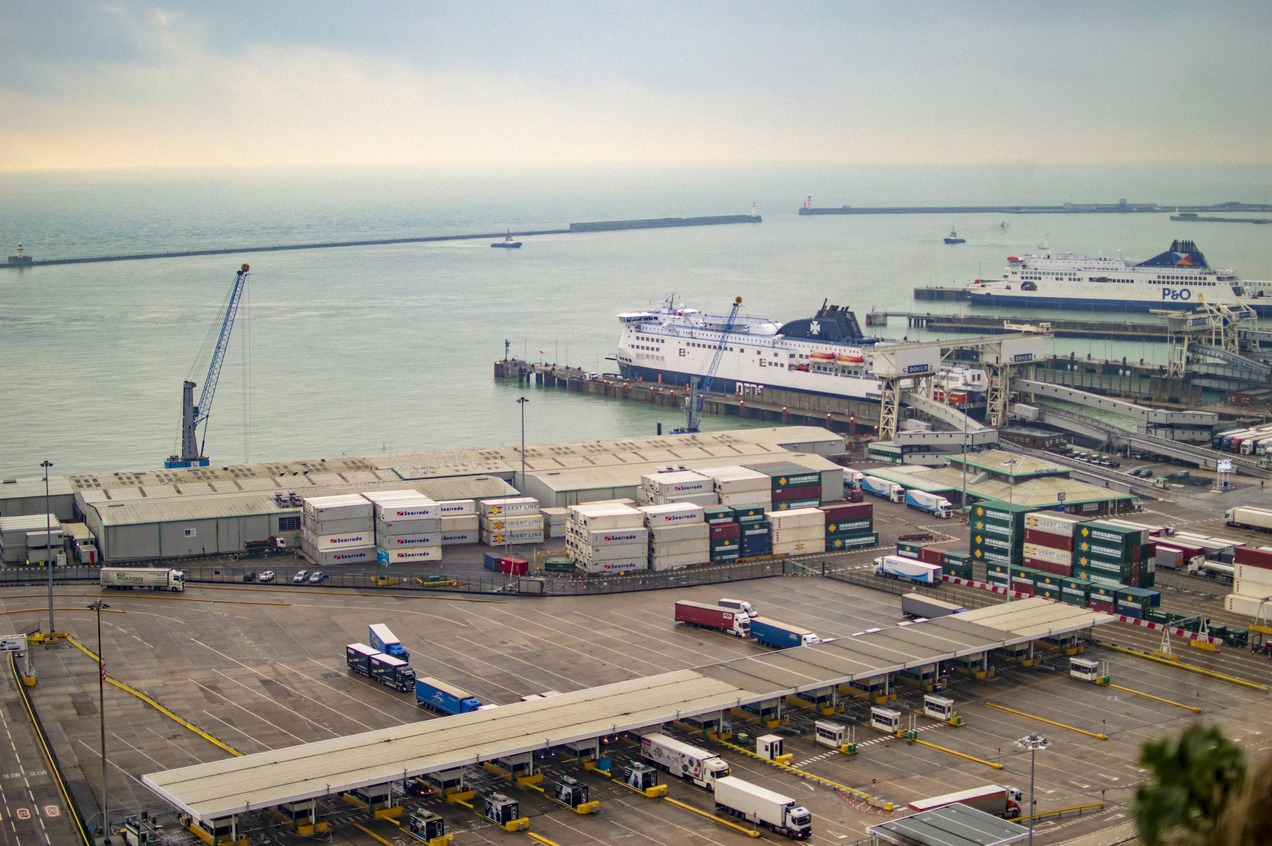
The fastest link is across the Channel: Calais - Dover (P&O Ferries, DFDS and Irish Ferries) in around 90 minutes and Dunkirk - Dover (DFDS) in about 2 hours. From the Netherlands there are the overnight ferries Rotterdam - Hull (P&O Ferries) and Amsterdam - Newcastle (DFDS), as well as the day and night route Hoek van Holland - Harwich (Stena Line).
Travellers coming from southern or western France also have additional links from Normandy and Brittany to southern England. All bookable routes are listed on the homepage and in the timetable.
Which ferry companies sail to England? +
These are the main operators running services to England:
How long does the crossing to England take? +
That depends a lot on the route:
The Channel routes are ideal for a quick hop to south-east England, while the overnight ferries from the Netherlands get you straight to northern and central England without a long drive.
Are there overnight ferries to England? +
Yes. Rotterdam - Hull and Amsterdam - Newcastle are classic overnight ferries: you board in the evening, sleep in your cabin and arrive the next morning. Hoek van Holland - Harwich also runs both day and night sailings.
The advantage: you sleep through the crossing, save the cost of a hotel night and arrive rested in northern England. A cabin is compulsory on the overnight ferries, and they sell out early in peak season.
Which route is right for me? +
That depends on where in England you're heading:
Rule of thumb: for the shortest crossing, go via the Channel. Travellers from further afield in mainland Europe who want to avoid a long drive through France often prefer an overnight ferry from the Netherlands instead.
Can I travel as a foot passenger without a car? +
That depends on the route. Dunkirk - Dover is for vehicles only, foot passengers aren't carried on that route. On the other links, it's best to check foot-passenger travel directly with the ferry operator, as terminal access and check-in differ from the vehicle process.
Booking & Check-in
How and when do I get my ferry ticket? +
After booking and paying online, you'll usually receive a booking confirmation by email within a few minutes. This also serves as your e-ticket.
At check-in at the port, you show the barcode printed out or directly on your smartphone. Just make sure the code is clearly readable on the screen. If nothing has arrived after 24 hours, check your spam folder and contact the ferry operator's customer service.
When do I need to check in at the port? +
As a rule of thumb, with a vehicle, be at the port at least 60 to 90 minutes before departure, earlier still in peak season. The exact times are shown in your booking confirmation and vary by port and operator.
Important: since February 2026, check-in also includes a check of your ETA travel authorisation. Without a valid ETA, the ferry operator will refuse boarding. Build in enough time for your journey to the port.
What should I do if I miss the ferry? +
If it looks like you won't make it in time, call the operator's customer service straight away. It's sometimes possible to rebook onto a later sailing, provided space is available and your fare allows it. After check-in closes, many low-cost fares are forfeited without a refund.
Can I cancel or change my ferry booking? +
That depends on the fare, not the route. Flexible fares can usually be changed or cancelled free of charge right up until shortly before departure, while cheaper low-cost fares are generally non-refundable and only changeable within limits. The earlier you get in touch, the lower any fees are likely to be. The binding terms are set out in your booking confirmation.
What happens if there''s a storm, delay or cancelled sailing? +
In storms or if there's a technical problem, a departure can be delayed or cancelled. Under EU Regulation 1177/2010, you're entitled to assistance in the event of major delays and cancellations - refreshments and meals, and overnight accommodation if needed. If the operator cancels the crossing, you can usually choose between a free rebooking and a full refund. Give a reachable mobile number when booking so you hear about any changes first.
Entry Requirements & Documents
Do I need an ETA to enter England? +
Yes. Since 25 February 2026, all EU, EEA and Swiss nationals need an ETA (Electronic Travel Authorisation) to enter the UK, regardless of how they travel. The ETA is valid for two years and is linked digitally to your passport. Apply only through the official GOV.UK website or the UK ETA app, never through third-party providers. Full details, the application process and common mistakes are covered on the Entry Requirements page.
Is a national ID card enough to enter the country? +
No. Since Brexit, national ID cards are no longer accepted at the UK border for most European nationals. For England, Scotland, Wales and Northern Ireland you need a valid passport that covers your whole trip. More on the Entry Requirements page.
Do children need their own ETA? +
Yes. Every traveller needs their own ETA and their own passport, including babies and young children. Parents or guardians can apply on a child's behalf. For group and school trips, allow plenty of lead time, since each participant needs a separate application. Details on the Entry Requirements page.
Do I need a visa for a holiday in England? +
For tourism, family visits and business trips of up to 180 days, most EU, EEA and Swiss nationals don't need a visa - the ETA is enough. A visa is only required for longer stays, work or study. Everything else you need to know about entry requirements is on the Entry Requirements page.
Vehicles & On Board
Can I bring my car or motorhome? +
Yes, all routes to England are served by car ferries. Cars, motorhomes, caravans, motorbikes and bicycles are all carried on board. The vehicle price depends on length and height, and a trailer, roof box or bike rack can easily push you into the next price category. Full details in our motorhome travel guide.
How big can my motorhome be? +
That depends on the operator. DFDS allows generous heights, while P&O Ferries' Rotterdam - Hull service has a height limit on the lower vehicle decks, above which motorhomes are parked on the open top deck. Measure your vehicle including any fittings and give the exact dimensions when booking. Operator-specific limits are listed in our motorhome travel guide.
Can I access my vehicle during the crossing? +
No. For safety reasons, the vehicle deck is closed for the entire crossing. Take anything you'll need on the way up to the passenger decks beforehand: medication, valuables, travel documents, chargers, and on the longer overnight ferries also washbags and a change of clothes.
What are the rules for gas cylinders in a motorhome? +
Gas cylinders must be turned off and all valves closed for the entire crossing. This is checked at boarding. Cylinders can stay on board but must be secured. Switch your fridge to battery or 12-volt power before boarding. More tips for the crossing in our motorhome travel guide.
Do I need to be ready to drive on the left in England? +
Yes, driving in the UK is on the left. It takes some getting used to at first, so take extra care at roundabouts and when turning. Adjust or mask your headlights so you don't dazzle oncoming traffic, and carry proof of insurance with you.
Is there Wi-Fi and food on board? +
On the overnight ferries to Hull and Newcastle you'll find cabins, restaurants, bars, an onboard shop and lounge areas, usually with Wi-Fi too. On the short Channel crossings to Dover the offering is limited to a café, seating areas and a shop - which is really all you need for a 90-minute trip. Check the relevant route page for exactly what your ship offers.
Travelling with a Dog or Pet
Can I bring my dog on the ferry? +
Yes, dogs are welcome on the ferries to England. DFDS offers dedicated pet cabins on Amsterdam - Newcastle, and P&O Ferries has dog-friendly cabins and kennels on Rotterdam - Hull. On the short Channel routes, dogs usually stay in the vehicle. Full details in our dog and pet travel guide.
What does my dog need to enter England? +
An EU pet passport issued in the EU is still accepted for entry into Great Britain; you only need an Animal Health Certificate if your dog does not have one. Your dog also needs an ISO microchip fitted before the rabies jab, a rabies vaccination at least 21 days old and a tapeworm treatment given 24 to 120 hours before arrival. The full checklist is in our dog and pet travel guide.
Which ferries are the most dog-friendly? +
Dogs travel most comfortably on the overnight ferries: DFDS on Amsterdam - Newcastle with dedicated pet cabins, and P&O Ferries on Rotterdam - Hull with dog-friendly cabins and kennels. On the Channel routes to Dover, dogs stay in the vehicle. Details and cabin tips in our dog and pet travel guide.
Are any dog breeds banned from entering the UK? +
Yes. Pit Bull Terriers, Japanese Tosas, Dogo Argentinos and Fila Brasileiros are not allowed to enter the UK, and crossbreeds of these types can also be turned away. A maximum of five pets are allowed per traveller. More on travelling with a four-legged companion in our dog and pet travel guide.
Prices, Timetable & Mini Cruises
How much does the ferry to England cost? +
The price depends on route, season, how far ahead you book, vehicle length and number of passengers. As a rough guide: the short Channel routes to Dover are the cheapest for the ferry crossing itself, while the overnight ferries with a cabin cost more. The binding price for your date and vehicle is shown when you book on the relevant route page, such as Calais - Dover or Rotterdam - Hull.
You can save by booking early, booking your outbound and return together, and travelling in the off-season.
Where can I find the timetable and departure times? +
All current departures are listed in the timetable. On the short Channel routes, ferries run at very frequent intervals, while the overnight ferries from the Netherlands usually have one departure per day and direction, in the evening. The exact times for your travel date are shown when you book on the route page.
Are there mini cruises to England? +
Yes. On Amsterdam - Newcastle, DFDS offers a mini cruise: two nights on board with a day ashore in Newcastle in between. You book the outbound and return crossing as a package and sleep in your cabin. A great option if you want to combine the onboard experience with a short trip to north-east England.